Every Life Matters: Wildlife Rescue Stories – May 2026
Blog
In May 2026, our Animal Protector Program carried out 34 interventions, rescuing and rehabilitating 34 wild animals. From a vulnerable Asian Palm Civet and an entangled Burmese Python to a White-breasted Waterhen hatchling reunited with its family, each rescue reflects the importance of timely intervention, compassion and coexistence.
From often misunderstood reptiles such as the Spectacled Cobra, Burmese Python, Bronzeback Tree Snake, Common Wolf Snake, Rat Snake, Copper-headed Trinket, and Wall's Krait, to vulnerable mammals like the Asian Palm Civet and Palm Squirrel, and delicate birds including the White-breasted Waterhen and Spotted Dove, every rescue carried a story of resilience, coexistence, and hope.
Behind each intervention was a compassionate choice—a concerned individual who chose to seek help instead of acting in fear, trained rescuers ready to respond, and supporters like you who made that response possible. Some animals were safely reunited with their families, some required specialised rehabilitation before they could return to the wild, and others were relocated from situations of immediate danger. Together, these rescues reflect not only the growing challenges faced by wildlife, but also the extraordinary impact that timely intervention can make. Because of your continued support, every frightened hatchling, displaced mammal, and misunderstood reptile was given the care, protection, and second chance it deserved. Together, we continue building a future where every wild life is valued, protected, and allowed to thrive where it belongs—in the wild.
A Lost Little Climber Finds Safety — Rescue of a Juvenile Asian Palm Civet
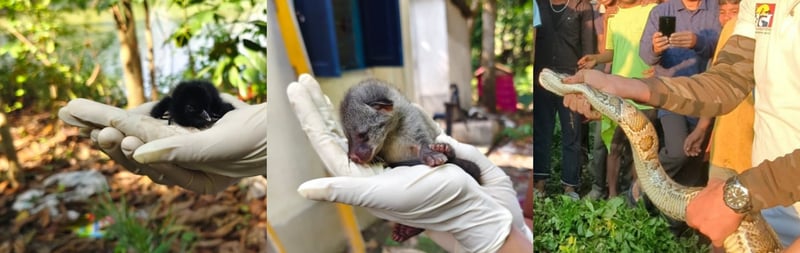
On 3 May 2026, our rescue team received an urgent call from Habra in North 24 Parganas, where a juvenile Asian Palm Civet had been found lying alone in the courtyard of a residential home. Vulnerable, weak, and separated from its mother, the tiny survivor faced overwhelming odds before compassionate community members chose to seek help.
It is believed that the young civet had accidentally fallen from its nest and may have been carried away from its original location by a feral animal before being discovered. Alone and unable to fend for itself, the juvenile was in desperate need of care and protection.
Upon reaching the site, our experienced rescuers made every effort to reunite the young civet with its mother—a process that is always prioritised when rescuing infant wildlife. The surrounding area was carefully searched for signs of its nest, and the rescue team patiently monitored the location throughout the day in the hope that its mother would return. Sadly, despite waiting for several hours, neither the nest could be located nor did the mother come back to reclaim her young one.
With no possibility of natural reunification and the animal too young to survive independently, the juvenile was taken into protective care after informing the Forest Department. Initial assessment revealed that the civet was weak and dehydrated, although fortunately no major external injuries were observed.
The journey of rehabilitation began immediately. The young civet was housed in a quiet, stress-free enclosure where warmth, hydration, and specialised care could be provided around the clock. During the initial days of rehabilitation, it was fed milk on demand nearly eight to ten times a day to support healthy growth and recovery. As its condition steadily improved, seasonal fruits were gradually introduced into its diet, allowing the animal to transition towards more natural feeding behaviours.
Equally important was helping the civet develop the skills it would one day need to survive in the wild. Environmental enrichment was carefully designed to encourage natural instincts, with wooden logs for climbing, hanging ropes for exploration, and wooden boxes that served as artificial dens where it could rest and feel secure. Human interaction was intentionally kept to a minimum to prevent habituation and preserve its wild behaviours.
Today, the transformation has been remarkable. The juvenile has gradually regained its strength, begun feeding independently, and is displaying healthy exploratory and climbing behaviours characteristic of its species. These important milestones are encouraging signs that rehabilitation is progressing successfully.
The young civet continues to remain under expert care and will stay in rehabilitation until it is fully independent, physically fit, and behaviourally prepared for life in the wild. Once comprehensive health and behavioural assessments are complete, and in consultation with the Forest Department, it will be released into a suitable natural habitat where it can begin the next chapter of its life—free and wild, as nature intended.
This rescue is a gentle reminder that wildlife's youngest lives are often the most vulnerable. Sometimes, survival begins not with a dramatic rescue, but with patience—the patience to wait for a mother who may never return, and the commitment to provide care when nature's smallest creatures need it most.
Donor Impact Note:
Your support makes long-term rehabilitation possible for vulnerable young wildlife like this Asian Palm Civet. From emergency rescue and specialised nutrition to safe housing, environmental enrichment, and round-the-clock care, you are helping orphaned and displaced animals grow stronger every day—giving them the chance to return safely to the wild where they belong.
Freed from the Net — Rescue of a Burmese Python
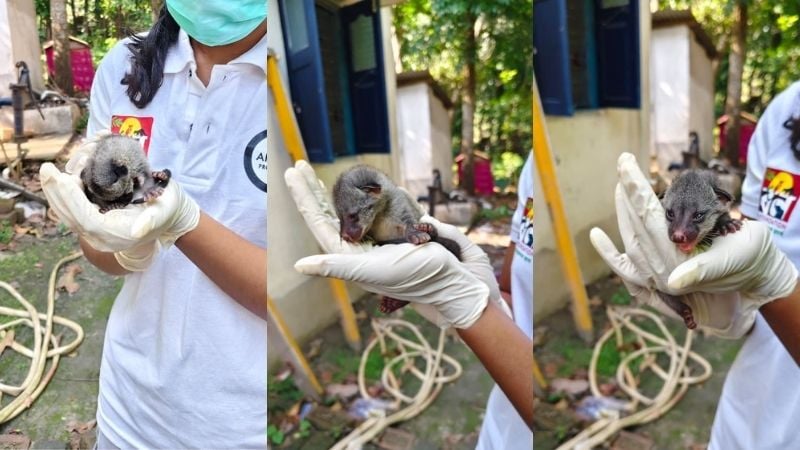
On 22 May 2026, an urgent rescue call came from Dhangdhing Guri in Coochbehar, where a large Burmese Python had become trapped in a protective net covering a household garden. What began as an ordinary day quickly turned into a moment of panic for local residents as they discovered one of the world's largest snake species helplessly entangled within the netting.
Protective nets are often installed around homes and gardens to safeguard plants and produce. However, for wildlife moving silently through human-dominated landscapes, these barriers can become dangerous traps. Unable to free itself, the python remained entangled, vulnerable to injury, stress, and escalating human disturbance as curious onlookers gathered around the scene.
Upon receiving information from the public, our volunteer rescue team responded immediately. Ensuring the safety of both the local community and the animal, the rescuers carefully assessed the situation before beginning the delicate process of freeing the snake from the net without causing further harm.
Despite the ordeal, the Burmese Python was found to be in relatively stable condition. However, prolonged entanglement had caused minor superficial skin injuries along its body. Immediate first aid was administered on-site, with the wounds carefully cleaned and treated with povidone-iodine (Betadine) ointment to promote healing and prevent infection.
Once safely rescued and treated, the python was closely assessed to determine its suitability for release. Encouragingly, the snake remained alert and exhibited normal behaviour, indicating that it had suffered no serious physical trauma from the incident.
As the animal was deemed fit for release, it was relocated and released on the very same day into Patlakhawa Forest in Coochbehar—a protected habitat that supports a healthy population of Burmese Pythons and provides abundant natural prey and suitable shelter. Returning the animal to this protected landscape not only gives it the opportunity to thrive in its natural environment but also significantly reduces the likelihood of future encounters with people.
This rescue is a powerful reminder that human-made structures, though well-intentioned, can unintentionally pose risks to wildlife. It also demonstrates how compassion and timely intervention can transform fear into coexistence. Rather than harming the snake, local residents chose to seek help—allowing a potentially tragic situation to become a story of survival and safe return.
Every rescue like this strengthens the bridge between communities and wildlife, proving that peaceful coexistence begins with a single compassionate choice.
Donor Impact Note:
Your support makes rapid wildlife rescues like this possible. From emergency response and rescue equipment to transportation, first aid, and safe relocation, you are helping ensure that misunderstood species like the Burmese Python are given the protection and second chance they deserve—back in the wild where they belong.
Back Where It Belongs — A White-breasted Waterhen Hatchling Returns Home
On 5 May 2026, a tiny life found its way back to where it belonged—not through chance, but through compassion, awareness, and timely intervention.
With the arrival of the monsoon season, wetlands across the region come alive with the next generation of waterbirds taking their first fragile steps into the world. During this vulnerable period, young hatchlings can easily be mistaken as abandoned when they are, in fact, under the watchful care of their parents nearby.
In Shimuliapara, North 24 Parganas, a young boy discovered a White-breasted Waterhen hatchling near a marshland and brought it home. Fortunately, our regular wildlife awareness programmes in the community had already planted the seeds of compassion and understanding. Recognising that wild animals belong in the wild, one of the family's neighbours immediately contacted our rescue team for assistance.
Our rescuers promptly reached the location and gently explained to the child and his parents why young wild birds should never be kept in captivity, even when they appear helpless. Understanding the importance of allowing wildlife to remain with their families whenever possible, the parents voluntarily handed over the hatchling so that it could receive appropriate care and assessment.
Initial examination revealed encouraging news. The young bird was in good physical health with no visible injuries. Though visibly frightened by its unfamiliar surroundings and human presence—a perfectly natural response for a wild hatchling—it showed no signs of illness or weakness. Importantly, the bird did not require rehabilitation or medical intervention. What it needed most was the opportunity to return home.
Recognising that prolonged captivity could cause unnecessary stress and interfere with its natural development, our team prioritised immediate reunification. Returning to the original marshland with the individual who had recovered the bird, the rescuers carefully surveyed the area in search of its family.
Their patience was rewarded. Nearby, they located several White-breasted Waterhen hatchlings accompanied by their attentive parents. The rescued hatchling was gently released at the site, where, in a heartening moment, it successfully reunited with its family and returned to the safety of its natural habitat.
Some rescues do not require weeks of rehabilitation or complex medical care. Sometimes, the greatest act of compassion is simply helping wildlife return to where it has always belonged. This story is also a powerful reminder that conservation begins with awareness. Because a neighbour recognised the importance of taking action, because a family chose compassion over curiosity, and because timely intervention was possible, a young bird was given the chance to grow up wild and free.
Donor Impact Note:
Your support makes community-based wildlife protection possible. Through rescue efforts, transportation, and ongoing wildlife awareness programmes, you are helping people make informed and compassionate choices that keep wild animals with their families and in their natural homes. Together, we are ensuring that even the smallest lives are given the chance to remain wild.