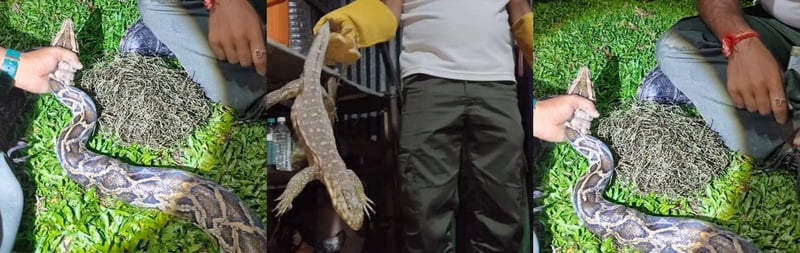
In July 2026, our Animal Protector Program carried out 38 wildlife rescue interventions, helping animals in distress across local communities. From a large Burmese Python rescued from a roadside tree to a Wall’s Krait found inside a home and a Yellow Monitor Lizard rescued from a ceiling, each intervention demonstrated the importance of trained rescuers, community awareness and peaceful coexistence between people and wildlife.
Introduction: Every Life Matters – July 2026 Wildlife Rescue Highlights
July was another month of urgent wildlife rescues, rapid responses, and compassionate action under our Animal Protector Program. During the month, our team carried out 38 interventions, rescuing and rehabilitating 38 wild animals across our communities. The animals included frequently misunderstood reptiles such as the Rat Snake, Banded Krait, Spectacled Cobra, Yellow Monitor Lizard, Buff-striped Keelback, Wall’s Krait, Checkered Keelback, and Burmese Python, along with vulnerable birds such as the Lineated Barbet. Each rescue demonstrated the importance of timely intervention, responsible wildlife response, community awareness, and peaceful coexistence between people and animals.
Behind every intervention was a moment when an animal was at risk—and a community member chose to seek help rather than respond with fear. With trained rescuers, timely action, coordination with emergency services and forest authorities, and the continued support of compassionate donors, these animals were given the protection and care they needed. Wherever possible, they were safely returned to suitable natural habitats. Together, we are helping build a future where wildlife is understood, protected, and given the opportunity to live safely in the wild where it belongs.
A Giant in the Tree Finds Its Way Back to the Wild – Rescue of an Indian Burmese Python
On 28 July 2026, around midday, our rescue team received an urgent call from Station More, Falakata, Alipurduar, after a large snake was spotted coiled high in the branches of a roadside tree near a busy commercial area. When the team reached the location, the snake was identified as an approximately 7.5-foot Indian Burmese Python.
The python was positioned high above the ground, making the rescue particularly challenging. Attempting to reach the animal without appropriate equipment could have placed both the rescuers and members of the public at risk. Recognising the need for additional technical support, our team immediately contacted the Fire & Emergency Services, who responded promptly with a ladder and the necessary equipment.
Working together, the rescuers carefully accessed the tree from the roof of a nearby shop. For nearly an hour, the team worked patiently and cautiously to secure the large python. Their coordinated efforts ensured that the snake was brought down safely without causing injury to the animal or putting the public at risk.
Once secured, the python was carefully assessed. Fortunately, it was found to be healthy, alert, and in good physical condition, with no visible wounds, deformities, or signs of illness. As the snake was fully capable of surviving independently, no medical treatment or rehabilitation was required.
The python was temporarily secured in a ventilated rescue bag and safely transported to Khayerbari, Alipurduar, a suitable natural habitat. It was released on the same day, 28 July, in the presence of the concerned Beat Officer. Following its release, the python moved safely into the surrounding forest.
This rescue is a powerful example of what can happen when communities, rescue teams, emergency services, and forest authorities work together. A potentially dangerous situation near a busy commercial area was transformed into a safe return to the wild—with compassion replacing fear and cooperation protecting both people and wildlife.
As our rescuer Dipankar Dey shared:
“Saved from a tight spot and safely handed over to the wild where it belongs. Coexistence is the only way forward.”
Donor Impact Note
Your support makes rapid and technically challenging rescues like this possible. It helps provide emergency transportation, rescue equipment, field logistics, trained rescuers, and the coordination needed to respond safely when wildlife enters human spaces.
A Special Thank You
We sincerely thank the Fire & Emergency Services, Forest Department, local Beat Officer, and local residents for their prompt cooperation and support. Their collective efforts helped ensure a safe outcome for both the python and the community.
What’s Next
The Indian Burmese Python has been successfully returned to a suitable forest habitat, where it can continue its natural life and ecological role in the wild.
A Midnight Visitor Finds a Safe Way Home – Rescue of a Wall’s Krait
At around 10:00 PM on 10 July 2026, our rescue team received an emergency call from residents of Collegepara, Falakata, after a Wall’s Krait had entered the storeroom of a residential house. With a potentially venomous snake inside a family home, the situation could have posed a serious risk to both the residents and the animal.
Our team responded promptly, arriving at the location and carefully locating the snake inside the storeroom. Using appropriate snake-handling equipment and trained rescue techniques, the team safely secured the Wall’s Krait and placed it in a ventilated rescue bag for transportation. The operation was carried out carefully to avoid unnecessary stress or harm to the snake.
During the initial assessment, the Wall’s Krait was found to be active, alert, and in good physical condition, with no visible injuries or signs of illness. As it was healthy and capable of surviving independently, no medical treatment or rehabilitation was required.
Following the assessment, the snake was safely transported to Kunjanagar, Alipurduar, where it was released into suitable natural habitat on the same night. The Wall’s Krait safely disappeared into natural cover, marking a successful end to the late-night rescue.
The rescue team also used the opportunity to speak with the family about snake identification, the ecological importance of snakes, and the importance of contacting trained rescuers rather than attempting to handle wildlife themselves. Their calm response and willingness to seek professional help helped prevent a potentially dangerous situation from escalating.
This rescue is a reminder that coexistence often begins with one simple decision: choosing to call for help instead of reacting with fear. A late-night encounter inside a home ended with both the family and the snake safe.
Donor Impact Note
Your support enables our teams to respond to wildlife emergencies—even late at night—by providing transportation, rescue equipment, trained personnel, field logistics, and community awareness. Every timely response helps protect both people and wildlife.
A Special Thank You
We sincerely thank the residents of Collegepara for remaining calm, maintaining a safe distance, and immediately contacting the rescue team. Their cooperation played an important role in ensuring a safe outcome for everyone.
What’s Next
The Wall’s Krait has been safely returned to its natural habitat, where it can continue its important ecological role as part of the ecosystem.
From a Ceiling to the Wild – Rescue of a Yellow Monitor Lizard
On 5 July 2026, our rescue team received information about a Yellow Monitor Lizard that had climbed onto the ceiling of a residential house in Gopenagar, Falakata, Alipurduar, West Bengal. With the reptile in close proximity to people, there was a risk of accidental harm to both the animal and the residents.
Our team responded promptly and carefully assessed the situation. Using safe handling techniques, the monitor lizard was gently brought down from the ceiling and secured in a cotton rescue bag to minimise stress and ensure safe transportation.
The Yellow Monitor Lizard was found to be alert, active, and in good physical condition, with no visible injuries, deformities, or signs of illness. As it was healthy and capable of surviving independently, no medical treatment or rehabilitation was required.
After a brief observation period, the reptile was safely transported and released on the same day into a nearby suitable natural habitat in Falakata, Alipurduar. Following its release, the monitor lizard safely dispersed into the surrounding vegetation.
During the rescue operation, local residents were also made aware of the ecological importance of monitor lizards and encouraged to contact authorised rescue teams rather than attempting to handle or harm wildlife themselves.
This rescue is a simple but powerful reminder that every life counts. When people choose to report wildlife emergencies and allow trained rescuers to respond, animals that enter human spaces can be safely protected and returned to the wild.
As our rescuer Dip Nag put it:
“Every life counts.”
Donor Impact Note
Your support helps our rescue teams respond quickly to wildlife emergencies by providing transportation, rescue equipment, field logistics, trained rescuers, and community awareness activities. These resources allow us to protect animals while helping communities learn to coexist with wildlife.
A Special Thank You
We sincerely thank the residents of Gopenagar for their prompt cooperation and willingness to protect wildlife by reporting the incident in time.
What’s Next
The Yellow Monitor Lizard has safely returned to its natural habitat, where it can continue its natural ecological role in the wild.
Together, We Make Every Rescue Possible
The Animal Protector Program is built on the belief that every animal deserves a chance to survive and thrive. Whether it is a large python high in a roadside tree, a krait inside a family home, or a monitor lizard seeking shelter in a residential space, every emergency requires timely action, trained response, and community cooperation.
The 38 interventions carried out in July 2026 represent more than numbers. Each one is a reminder that compassionate intervention can turn fear into coexistence and danger into a safe return to nature.
With your continued support, we can reach more animals, respond to more emergencies, strengthen community awareness, and give more wildlife a second chance to return to where they belong—the wild.