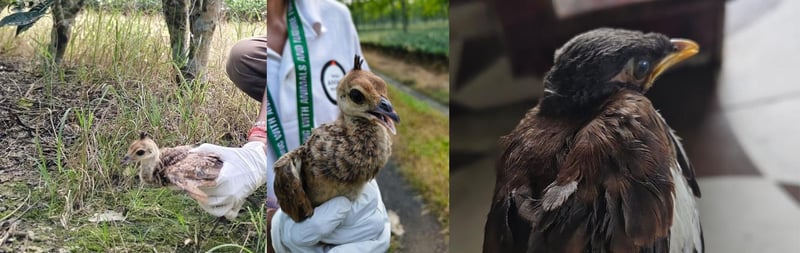
June was another month of urgent wildlife rescues, compassionate responses, and second chances. Under our Animal Protector Program, our team carried out 23 interventions, rescuing and rehabilitating 23 wild animals across our communities. From frequently misunderstood reptiles such as the Rat Snake, Burmese Python, Spectacled Cobra, Wall’s Krait, Banded Krait, Common Wolf Snake, Chequered Keelback, and Copper-headed Trinket, to beautiful birds such as the Indian Peafowl, Oriental Magpie-Robin, and Common Myna, each rescue highlighted the importance of timely intervention and peaceful coexistence between people and wildlife.
Introduction: Every Life Matters – July 2026 Wildlife Rescue Highlights
July was another month of urgent wildlife rescues, rapid responses, and compassionate action under our Animal Protector Program. During the month, our team carried out 38 interventions, rescuing and rehabilitating 38 wild animals across our communities. The animals included frequently misunderstood reptiles such as the Rat Snake, Banded Krait, Spectacled Cobra, Yellow Monitor Lizard, Buff-striped Keelback, Wall’s Krait, Checkered Keelback, and Burmese Python, along with vulnerable birds such as the Lineated Barbet. Each rescue demonstrated the importance of timely intervention, responsible wildlife response, community awareness, and peaceful coexistence between people and animals.
Behind every intervention was a moment when an animal was at risk—and a community member chose to seek help rather than respond with fear. With trained rescuers, timely action, coordination with emergency services and forest authorities, and the continued support of compassionate donors, these animals were given the protection and care they needed. Wherever possible, they were safely returned to suitable natural habitats. Together, we are helping build a future where wildlife is understood, protected, and given the opportunity to live safely in the wild where it belongs.
A Young Peacock Finds Its Way Home
On 14 June 2026, our rescue team received information about a juvenile Indian Peafowl that had strayed into a human-inhabited area in Arabinda Para, Falakata, Alipurduar, West Bengal. While the young bird was not injured, remaining in a human environment could have exposed it to risks from road traffic, domestic animals, and human disturbance.
Our team responded promptly and safely rescued the peafowl. During the initial health assessment, the bird was found to be alert, active, and in good physical condition, with no visible injuries, fractures, or signs of illness. No medical treatment was required.
After a brief observation period, the team confirmed that the juvenile was healthy and capable of surviving independently in the wild. It was carefully transported and released on the same day into a suitable natural habitat within its native range in Falakata.
This may have been a simple rescue, but it highlights the importance of acting quickly when wildlife enters human spaces. A timely call from local residents helped ensure that this young peafowl was protected from unnecessary danger and safely returned to the wild.
Donor Impact Note: Your support helps our rescue teams respond quickly when wild animals need assistance—providing transportation, field equipment, trained rescuers, and the resources needed to safely return animals to their natural habitats.
What’s next: The juvenile Indian Peafowl has been successfully returned to the wild, where it can continue growing and living freely in its natural habitat.
A Small Bird, Safely Returned — Rescue of an Oriental Magpie Robin
On 15 June 2026, our team received information about an Oriental Magpie Robin found within a residential area in Kharer Math, North 24 Parganas, West Bengal. Although the bird appeared healthy, remaining in a human-inhabited area could have exposed it to unnecessary risks, including human interference and domestic predators.
The rescue operation was led by Ms. Sneha Biswas, who safely secured the bird with logistical assistance from BAN Foundation rescue volunteers. During the initial assessment, the Oriental Magpie Robin was found to be active, alert, and responsive, with no visible wounds, fractures, or signs of illness.
As the bird was physically fit and capable of surviving independently, no medical treatment or rehabilitation was required. It was kept briefly in a secure temporary carrier for observation, during which it continued to display normal mobility and natural behaviour.
After confirming its fitness for release, the bird was safely transported and released later the same day into a suitable natural habitat in North 24 Parganas. The successful release ensured that the bird could return to its natural environment without unnecessary stress or prolonged captivity.
This rescue is a reminder that sometimes the best help we can provide wildlife is simply to ensure it is safe and return it to where it belongs. Prompt reporting by local residents and responsible intervention helped this small native bird get back to the wild.
Donor Impact Note: Your support helps make timely wildlife interventions possible by supporting transportation, field equipment, trained rescuers, and volunteer response—giving animals found in human spaces a safe pathway back to nature.
What’s next: The Oriental Magpie Robin has been safely returned to its natural habitat, where it can continue its life in the wild.
From a Ceiling to the Wild – Rescue of a Yellow Monitor Lizard
On 24 June 2026, our team received information about a juvenile Common Myna found in an unsafe location within a residential area in Benachity, Durgapur, Paschim Bardhaman, West Bengal. At such a young age, the bird was vulnerable to predators and other dangers associated with human settlements and was not yet capable of surviving independently in the wild.
Our rescue team safely brought the young bird into care. An initial examination found it conscious and responsive, with no visible fractures, external injuries, or signs of illness. While no medical treatment was required, the bird needed temporary supportive care because of its age.
During rehabilitation, the Common Myna was provided with appropriate nutrition, clean drinking water, warmth, and regular monitoring. Its enclosure included natural branches and sufficient space to encourage perching, movement, wing strengthening, and gradual flight practice. Human interaction was kept to what was necessary to minimise stress and support the development of natural behaviours.
Over the course of rehabilitation, the young bird steadily grew stronger. Its feeding behaviour, mobility, and flying ability improved, and it gradually became capable of moving and behaving independently. Once it demonstrated normal feeding, strong flight capability, and good overall health, it was assessed as ready to return to the wild.
The rehabilitated Common Myna was successfully released into a suitable natural habitat near Durgapur. From a vulnerable young bird in an unsafe residential area to a healthy bird capable of flying independently, its journey shows how timely intervention and patient care can give wildlife a second chance.
This rescue also highlights the importance of community awareness. A simple decision to report a vulnerable wild animal rather than attempting to keep it or ignore it can make all the difference.
Donor Impact Note: Your support helps provide rescued young animals with food, temporary shelter, transportation, rehabilitation supplies, and the care they need to grow strong enough to return to the wild.
What’s next: The Common Myna has been safely returned to its natural habitat, where it can continue its life independently.
Your Support Makes Every Rescue Possible
Your Support Makes Every Rescue Possible
Every intervention under the Animal Protector Program begins with a moment of vulnerability—but it can end with freedom. Whether an animal is displaced, trapped, injured, or simply struggling to survive in an increasingly human-dominated landscape, timely intervention can mean the difference between life and death.
Your support helps keep rescue teams ready, provide essential transportation and equipment, support rehabilitation, and give wild animals the second chance they deserve.
Together, we can help more animals return to where they belong—the wild.