World Elephant Day Brings New Developments to the Forefront for Elephants in Jaipur
News
On World Elephant Day 2026, World Animal Protection renewed its call to end elephant rides at Amer Fort in Jaipur, while welcoming developments towards the retirement and long-term care of captive elephants.
World Elephant Day is an international annual event dedicated to the preservation and protection of the world's elephants. The initiative brings together conservation organisations and citizens from all backgrounds to voice support for better protection measures and to combat illegal poaching, habitat loss, and the mistreatment of elephants in captivity. On the occasion of World Elephant Day, 12 August, 2026, World Animal Protection has appealed to the Government of Rajasthan to end elephant rides in Amer Fort in Jaipur by writing to the Chief Minister Of Rajasthan. World Animal Protection seeks a phased out but permanent cessation of elephant rides at the historic Amer Fort in Jaipur. This campaign highlights the severe physical and psychological trauma inflicted on these endangered animals. It proposes a swift transition toward a sustainable, cruelty free model of Indian heritage tourism that highlights the historical and cultural artifacts of Rajasthan, excluding elephant rides in Jaipur that abuse people and endangers safety of humans. On this occasion, more than seventy five individuals expressed their opposition to elephant rides in Amer Fort and raised their voice for keeping elephants free in the wild.
Amer Fort remains one of India’s most iconic tourist destinations. Yet, its global reputation faces significant risks due to the practice of using captive elephants for daily tourist entertainment. Decades of scientific research, veterinary assessments, and investigative wildlife reports reveal a grim reality. The elephants suffer from chronic foot infections, painful arthritis, and severe psychological distress. These conditions stem directly from walking on hard concrete surfaces under scorching heat while carrying heavy iron howdahs and multiple tourists.
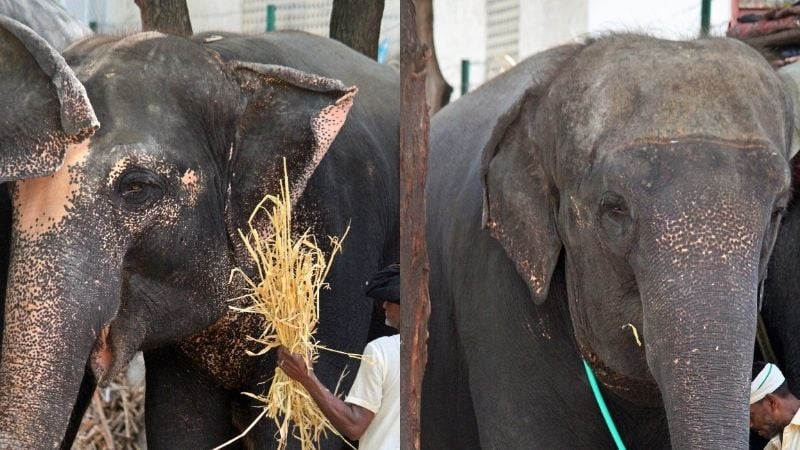
The welfare issues inherent in the Amer Fort elephant rides are systemic and deep rooted. Captive elephants are wild animals by nature. They undergo a brutal training process known as 'the crush' to break their spirit and make them submissive to human commands. At Amer Fort, many elephants are forced to work despite advanced age and serious medical ailments. Investigative audits have consistently found that a vast majority of these elephants suffer from compromised vision, permanent limb deformities, and severe nutritional deficiencies from poor diets.
Furthermore, the public safety risks associated with this practice are escalating rapidly. Elephants are highly intelligent, social, and emotional animals. When subjected to prolonged stress, isolation, and physical abuse, they can experience sudden bouts of psychosis, that results them in running amok. Over the years, multiple incidents at Amer Fort have seen stressed elephants turn aggressive, endangering international tourists, handlers, and local people. In an era where global travellers actively seek responsible tourism experiences, the continuation of animal exploitation severely damages Jaipur's tourism brand. An elephant named Chanchal was painted pink by the Russian artist Julia Buruleva for a photoshoot in 2025 and this elephant died earlier this year.
World Animal Protection is not merely demanding an end to the rides but presenting a viable solution. Under the phase out plan there lies a new framework whereby tourists can observe elephants in a natural sanctuary setting. This model promotes educational tourism, allowing visitors to watch elephants walk, bathe, forage, and socialise safely from a respectful distance.
Crucially, this proposed transition protects local livelihoods. The plan will propose that the current elephant handlers, known as mahouts, receive specialized training to transition into sanctuary guides, educational instructors, and caretakers. Financial models demonstrate that global tourists are willing to pay a premium for ethical wildlife encounters. This shift will secure stable, long term revenue for local communities while elevating Jaipur as a global pioneer in sustainable heritage tourism.
“As the international community celebrates World Elephant Day 2026, the eyes of the world are on Rajasthan. Progressive travel agencies worldwide are removing elephant rides from their itineraries. Global travel platforms are refusing to promote venues that exploit captive wildlife. Thirty companies have undertaken the wildlife friendly pledge of World Animal Protection in India to not offer elephant rides in their itineraries. World Animal Protection urges the Chief Minister of Rajasthan to act decisively and end elephant rides in Amer Fort and retire the elephants. Ending the Amer Fort elephant rides will honour India’s wildlife protection laws and secure a humane future for these gentle giants which are India’s National Heritage Animal,” says Gajender Kumar Sharma, Country Director, World Animal Protection in India.
We have also witnessed the announcement of an initiative of a corporate entity offering to take over the management of Haathi Gaon. On the occasion of World Elephant Day, the Ministry of Environment & Forest, Government of Rajasthan, announced a collaboration with Vantara, a wildlife rescue and rehabilitation centre established by the Reliance Foundation, to set up a facility at Hathi Gaon for the retirement and care of elephants, along with other related facilities to improve welfare conditions. While the announcement does not specifically mention phasing out elephant rides, the proposed facility and the focus on the longer term future of elephants are important developments in the context of our campaign. It provides an opportunity to work towards a future where elephants currently used for tourism can eventually move away from rides and live in a natural environment where they can express their natural behaviours.
For some time, the Government of Rajasthan has been looking to us to take the lead in developing a rehabilitation and retirement solution for the elephants. Given the scale, complexity and ongoing challenges involved, our position has consistently been that the Government should take the lead in establishing such a facility, with other organisations and partners contributing where appropriate. We have been encouraging the Government to take ownership of the initiative and explore different possible options for the long-term future of these elephants. The announcement is therefore a positive development and an important step in this direction.
This also comes in the backdrop of our consistent engagement, advocacy and lobbying at the appropriate levels over the past several years. We have maintained dialogue with the Government of Rajasthan as well as engaged at the national level, while continuing to build public and stakeholder support through media, celebrity, travel sector and public engagement. These efforts have helped keep the issue alive, maintain momentum and reinforce the need for a long-term transition away from elephant rides at Amer Fort.
We should see this announcement as an important step towards the future we have been advocating for. Our goal remains clear, to see elephant rides at Amer Fort phased out and to secure a future for these elephants where they can live in a natural environment and express their natural behaviours, rather than being used for tourism.
There is still work ahead to translate this positive development into a clear and lasting transition away from elephant rides. However, this announcement creates a new opportunity to continue the dialogue with the Government and other stakeholders and to build on the momentum created over the years.
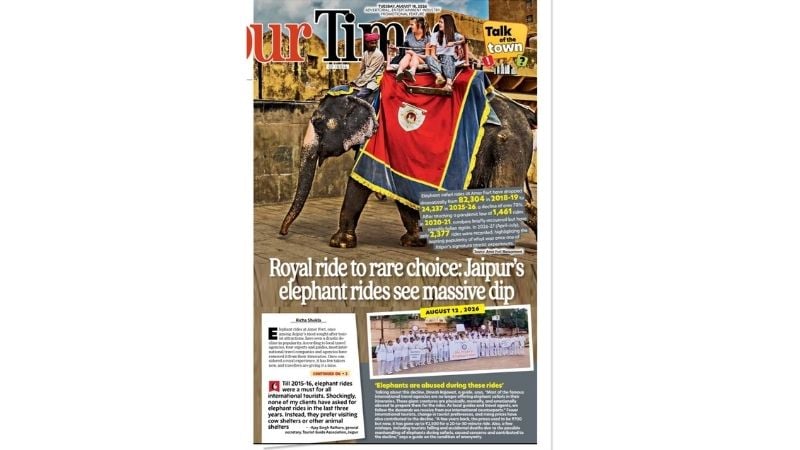
Also, it has been reported in the press that "The popularity of elephant ride safaris at the Amer Fort in Jaipur has declined sharply, with the number of tourists opting for elephant rides falling by around 70 per cent in seven years, according to official records. As many as 1,64,608 tourists opted for elephant safaris in 2018-19, but the numbers fell to 48,474 in 2025-26, a decline of more than one hundred thousand visitors. The data from the fort administration showed that 1,08,378 tourists took elephant rides in 2019-20. During the coronavirus pandemic, the number fell to 2,922 in 2020-21. The figure rose to 9,560 in 2021-22, 54,514 in 2022-23, 79,090 in 2023-24 and 67,018 in 2024-25 before declining again to 48,474 in 2025-26. The figures assume significance ahead of World Elephant Day, observed on August 12 to raise awareness about elephant conservation and welfare." The World Animal Protection World Elephant Day event on 12 August, 2026 held at Patrika Gate in Jaipur is featured prominently in the Times Of India news report on this development. These statistics reveal that coordinate campaigning along with effective corporate engagement and lobbying and advocacy with the government authorities can yield positive results.
We live in the hope that the declining demand for elephant rides in Amer Fort in Jaipur in Rajasthan will eventually lead to the end of this cruel spectacle and the rehabilitation of these elephants.